 TacticScale
What Halliburton Does & How It Makes Money (HAL)
Updated October 2026 · reflects Halliburton's latest reported financials
Oilfield services company helping energy producers drill and complete wells. Halliburton earns revenue by selling oilfield services, equipment, tools, and chemicals to energy producers worldwide, through two segments: Completion and Production, and Drilling and Evaluation.
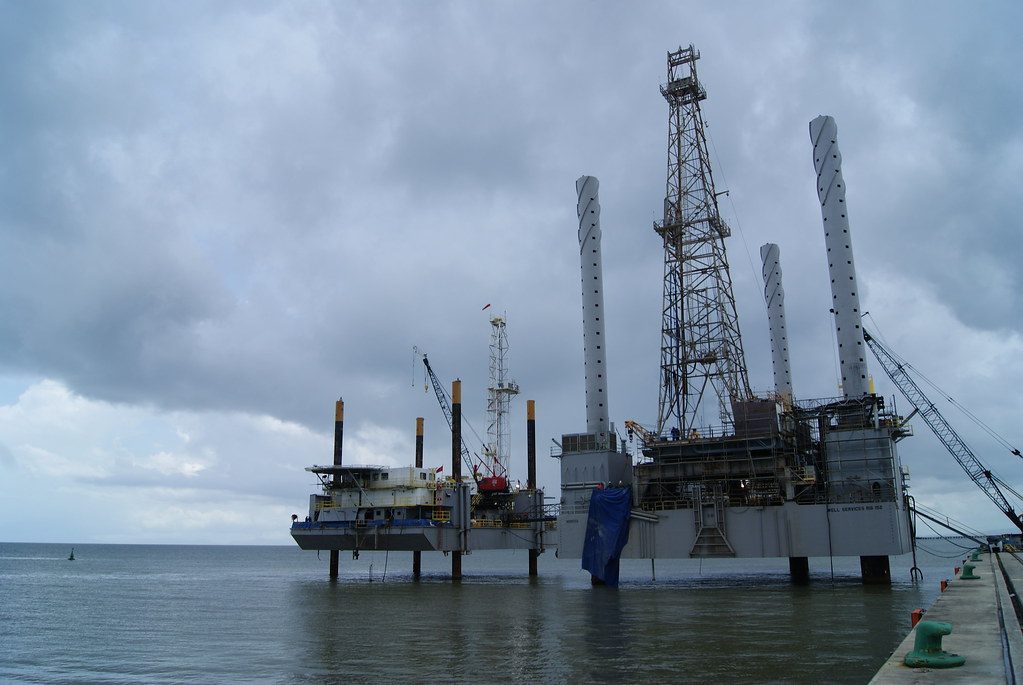
How Halliburton makes money
Halliburton earns revenue by selling oilfield services, equipment, tools, and chemicals to energy producers worldwide, through two segments: Completion and Production, and Drilling and Evaluation. It also sells digital software services and project and integrated asset management work.
What Halliburton does
Halliburton Company, founded in 1919 and based in Houston, Texas, is one of the major suppliers of products and services to the global energy industry. It helps oil and gas producers throughout a well's life, from drilling and evaluating a reservoir to completing the well and keeping production going. The company has two segments. Completion and Production covers stimulation and sand control, cementing, completion tools, electrical submersible pumps and artificial lift, coiled tubing and other production services, pipeline and process services, and specialty chemicals. Drilling and Evaluation covers drilling fluids, drilling systems, wireline and perforating, drill bits and coring, testing and subsea services, and cloud-based digital and AI solutions for subsurface insight and reservoir management. Because its customers are energy producers, demand for its services depends on how much the oil and gas industry spends on drilling and production.
Products & services
- Stimulation and sand control services
- Cementing services and casing equipment
- Electrical submersible pumps and artificial lift
- Drilling fluid systems and drill bits
- Wireline and perforating services
- Cloud-based digital and AI subsurface solutions
What is Halliburton worth?
On an owner-earnings DCF, Halliburton's most-likely value is about $27 versus a recent price near $33 (18% above fair value). But TacticScale only calls a stock undervalued when the price sits below its conservative no-growth floor (~$17) with a margin of safety — so the honest verdict here is “Fairly priced — no edge.” Fair value earns its keep only at the extremes, not in the wide middle.
Price sits in the normal range — fair value isn't actionable here; it earns its keep only when price drops below the no-growth floor, or runs to roughly double the optimistic case.
Analysis, not advice. Fair value is a margin-of-safety estimate from a deterministic owner-earnings DCF, not a price target or recommendation. See the full breakdown →
Related companies
Baker Hughes (BKR) · SLB (SLB) · Weatherford International (WFRD) · Helmerich & Payne (HP)