 TacticScale
What Advanced Micro Devices Does & How It Makes Money (AMD)
Updated October 2026 · reflects Advanced Micro Devices's latest reported financials
Chipmaker designing processors, graphics chips, and AI accelerators. AMD earns revenue by selling chips and related boards to PC and server makers, cloud providers, system integrators, distributors, and add-in-board manufacturers across its Data Center, Client and Gaming, and Embedded segments.
How Advanced Micro Devices makes money
AMD earns revenue by selling chips and related boards to PC and server makers, cloud providers, system integrators, distributors, and add-in-board manufacturers across its Data Center, Client and Gaming, and Embedded segments. It also earns from semi-custom chip design and development services.
What Advanced Micro Devices does
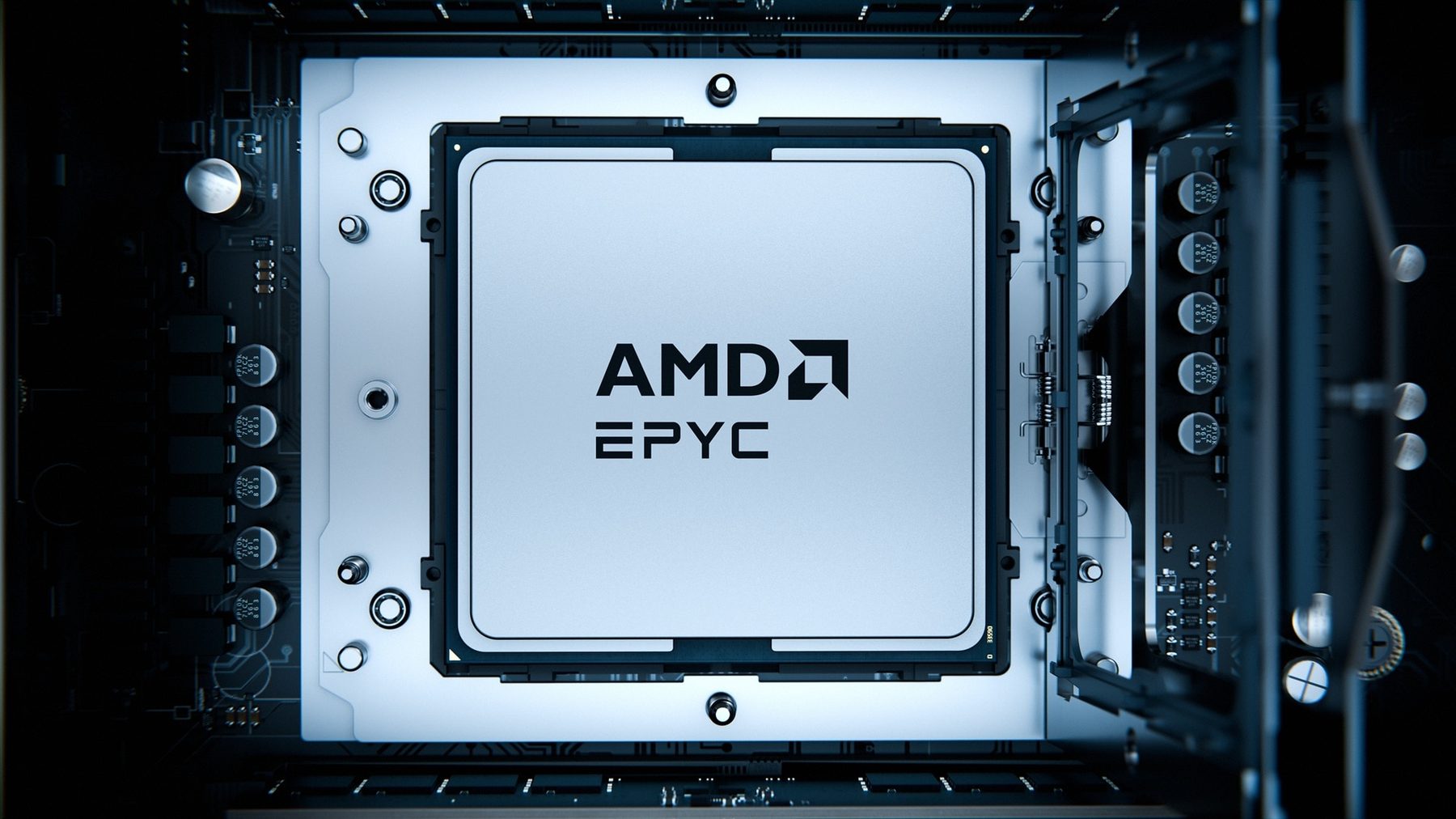
Advanced Micro Devices is a Santa Clara-based semiconductor company, founded in 1969, that designs processors, graphics chips, and AI accelerators. It reports three segments. Data Center covers EPYC server CPUs, Instinct AI accelerators, and AI and general-purpose compute infrastructure for hyperscale cloud providers. Client and Gaming covers Ryzen and Athlon PC processors and Radeon graphics. Embedded covers FPGAs, adaptive SoCs, and low-power processors. AMD's portfolio runs from consumer PCs to cloud AI infrastructure. Its FPGA and adaptive SoC lines (Virtex, Kintex, Zynq, Versal) and its Pensando and Alveo network acceleration boards give it a presence in programmable and networking hardware as well. Customers include OEMs, ODMs, public cloud providers, system integrators, distributors, and add-in-board makers.
Products & services
- AMD EPYC server processors
- AMD Instinct AI accelerators
- AMD Ryzen processors
- AMD Radeon graphics
- Versal and Zynq adaptive SoCs
- Alveo and Pensando acceleration boards
What is Advanced Micro Devices worth?
On an owner-earnings DCF, Advanced Micro Devices's most-likely value is about $281 versus a recent price near $608 (54% above fair value). But TacticScale only calls a stock undervalued when the price sits below its conservative no-growth floor (~$53) with a margin of safety — so the honest verdict here is “Fairly priced — no edge.” Fair value earns its keep only at the extremes, not in the wide middle.
Price sits in the normal range — fair value isn't actionable here; it earns its keep only when price drops below the no-growth floor, or runs to roughly double the optimistic case.
Analysis, not advice. Fair value is a margin-of-safety estimate from a deterministic owner-earnings DCF, not a price target or recommendation. See the full breakdown →
Related companies
Intel (INTC) · Analog Devices (ADI) · NVIDIA (NVDA) · Amlogic (Shanghai) (688099.SS)